
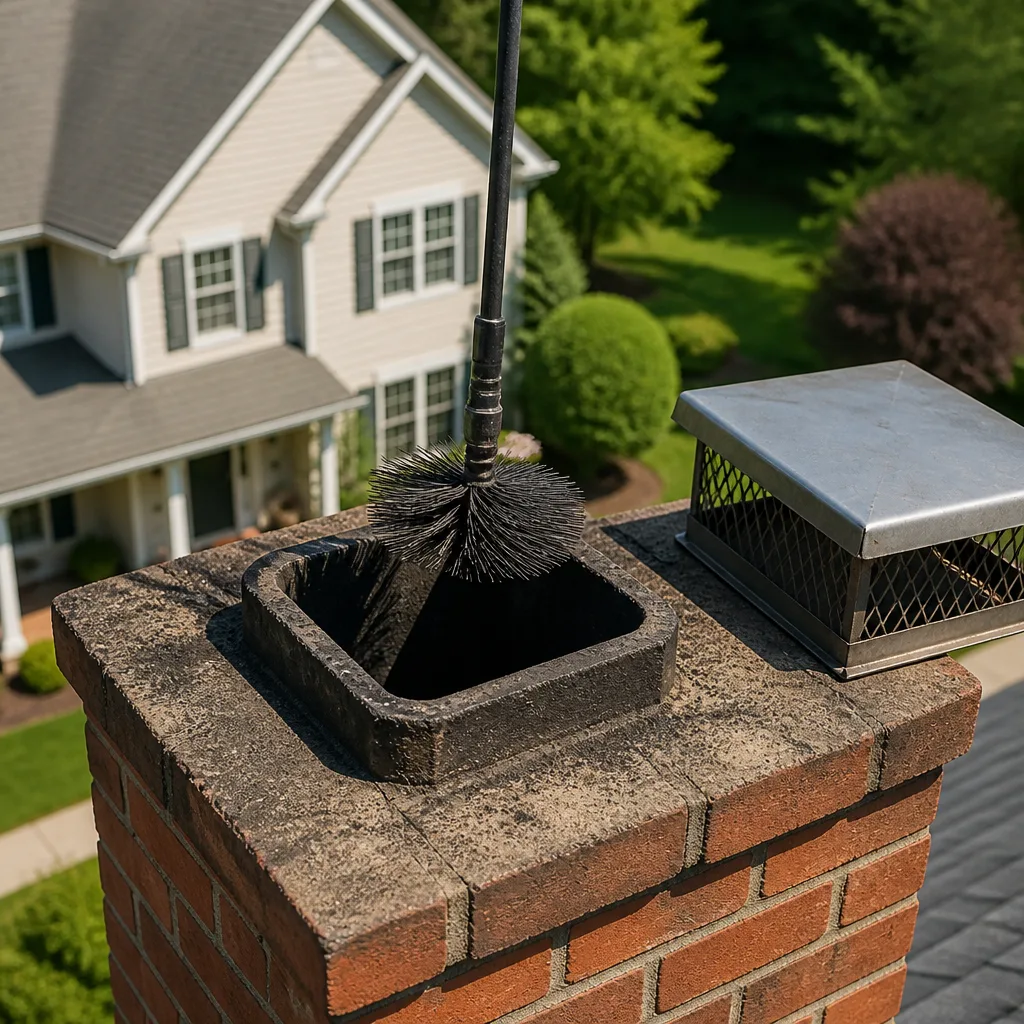
 Sweep & inspection
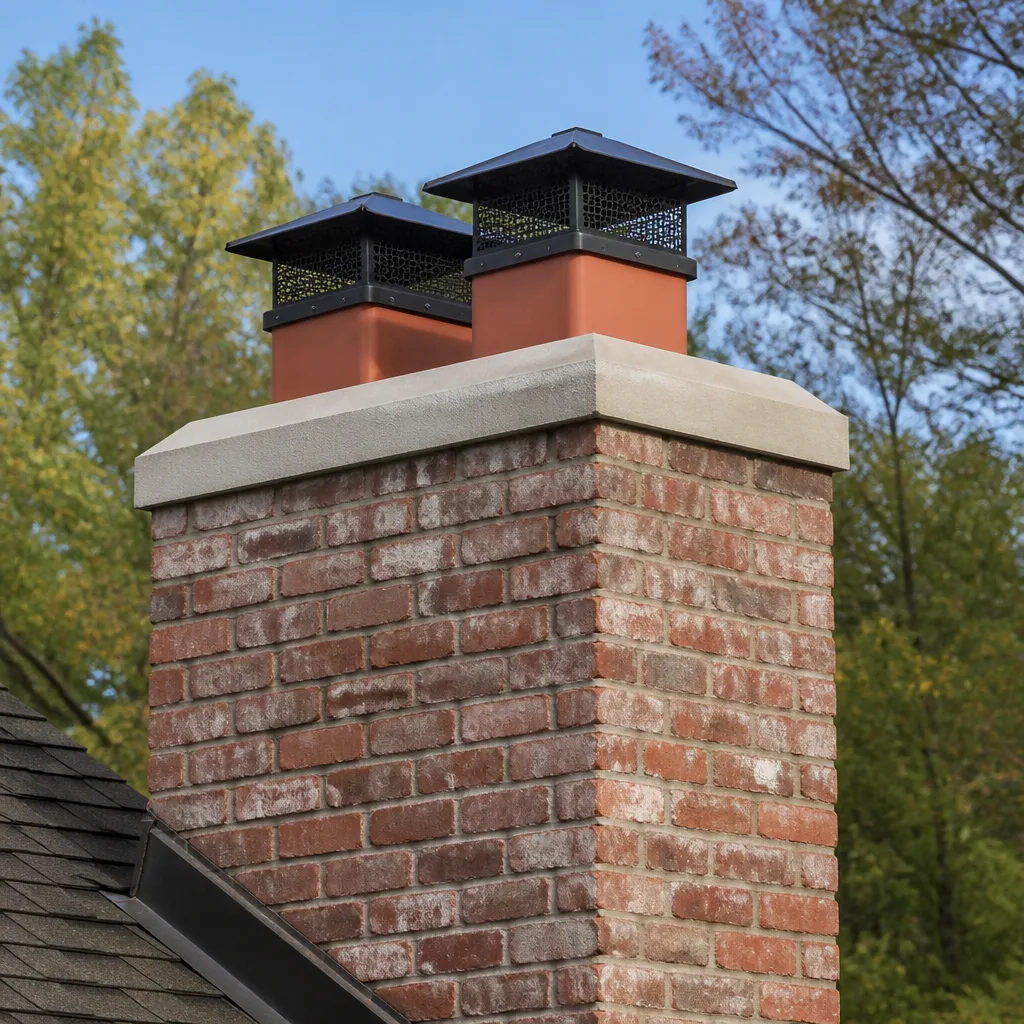 Caps & crowns
 Flue relining
 Masonry repair
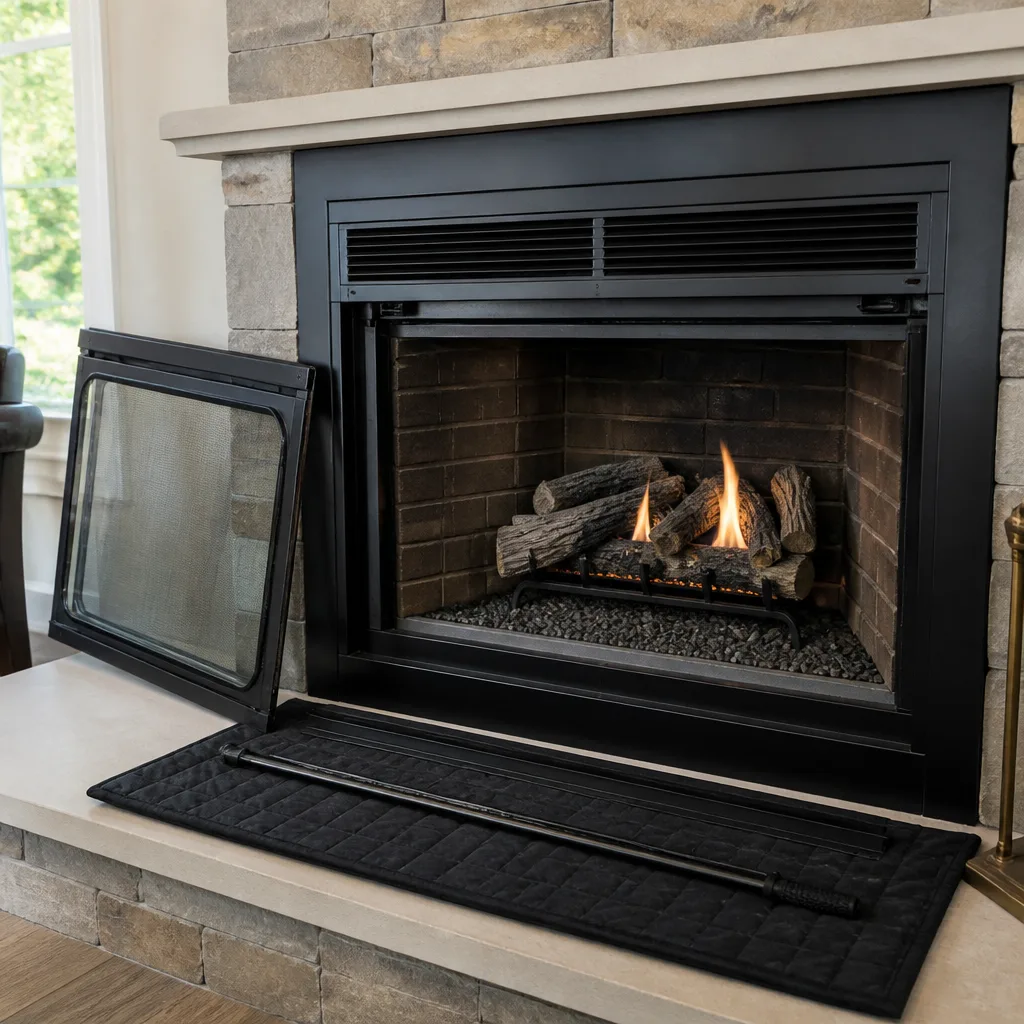 Gas fireplace service
Level 1 sweep and inspection to the NFPA 211 annual standard - flue, crown, cap, and flashing checked and photographed
Chimney sweep logs do not sweep chimneys. They loosen some creosote - which then falls where a brush and vacuum still have to collect it.
HeatShield Chimney Cap Installation: The Orange County Owner’s Guide
We stock and install HeatShield-compatible chimney caps throughout Orange County, with most installations running between $285 and $540 depending on flue size and roof access. We carry common HeatShield cap sizes on the truck, so many Orange County homes can have the cap swapped the same day we come out. The usual discovery isn’t dramatic: a homeowner notices water staining near the firebox after a rain, hears a clanking sound on windy nights, or finds bits of rusted mesh in the hearth. Danny Cortes sees the same pattern in older neighborhoods around Orange County, where caps installed in the 1990s and early 2000s have simply outlived their galvanized lids and started letting water sit on the crown.
Which HeatShield Models This Applies To
HeatShield caps are sold in standard flue diameters that match common Orange County masonry and prefab chimneys: 6-inch round, 8-inch round, and 13×13-inch square clay tile, with a few 13×18-inch rectangles on older mid-century homes built around Fullerton and Anaheim. The cap itself is a stainless lid over a galvanized or copper mesh body, and HeatShield’s version uses a slightly deeper skirt than most generic caps, which actually helps with wind-driven rain. If you’re matching an existing cap, look for the HeatShield stamp on the underside of the lid or measure the outside dimensions of the clay tile it sits over, not the inside of the flue. That’s the compatibility gotcha we run into weekly: homeowners measure the flue opening, order a cap that’s too small, and it rattles or gets blown loose. We’re an independent Orange County chimney company, not affiliated with HeatShield, but we’ve installed their caps alongside DuraFlex and Gelco liners for years and know which skirt depth actually grips the tile versus which one needs a tension screw.
Styles & brands we work with
Signs Your HeatShield Chimney Cap Installation Is Failing
- Water staining on the ceiling or wall near the fireplace. The most common failure is rust-through on the lid seam where the skirt meets the top plate. On Orange County homes near the coast, salt air starts this process years earlier than inland, around Lake Forest or Mission Viejo.
- Hearing a hollow thump or metallic rattle when the wind picks up. The cap’s tension screws or masonry screws back out over years of thermal expansion. We find caps sitting crooked on the tile more often than we find them actually blown off.
- You see daylight through the mesh when looking up from inside the firebox. The mesh around the cap’s sides corrodes first, especially if you burn wood regularly. Once the mesh is breached, birds and bees get in. Danny has pulled a three-foot-deep starling nest out of a cap in a Santa Ana home, and it had been there long enough to smell.
- Sparks or embers visible from the top on windy nights. If the mesh is gone, the cap is no longer doing its job as a spark arrestor. In Orange County’s dry autumns, that’s not a code compliance footnote: it’s a fire risk.
- The cap has shifted angle. Walk outside and look at the chimney from the street. If the cap sits off-level, the skirt is no longer sealing against the crown, and water is working its way under it.
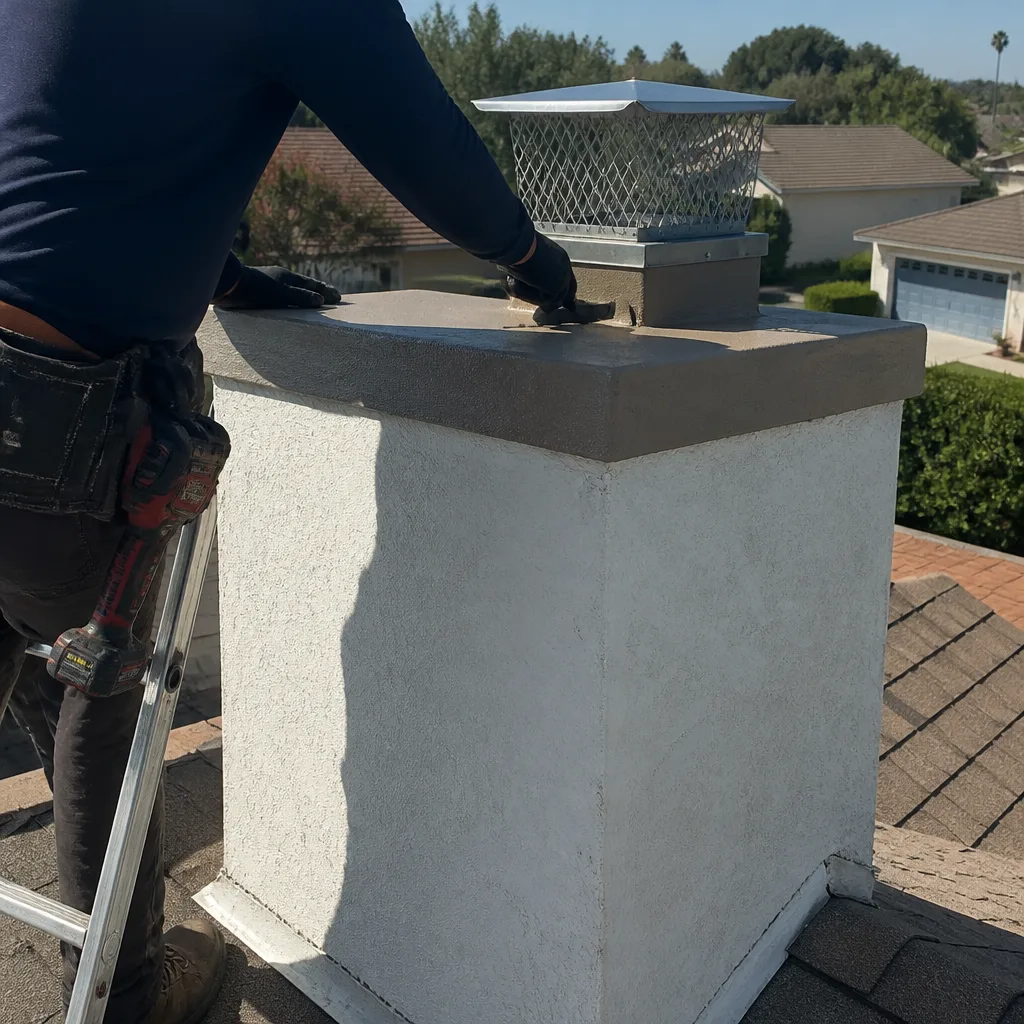
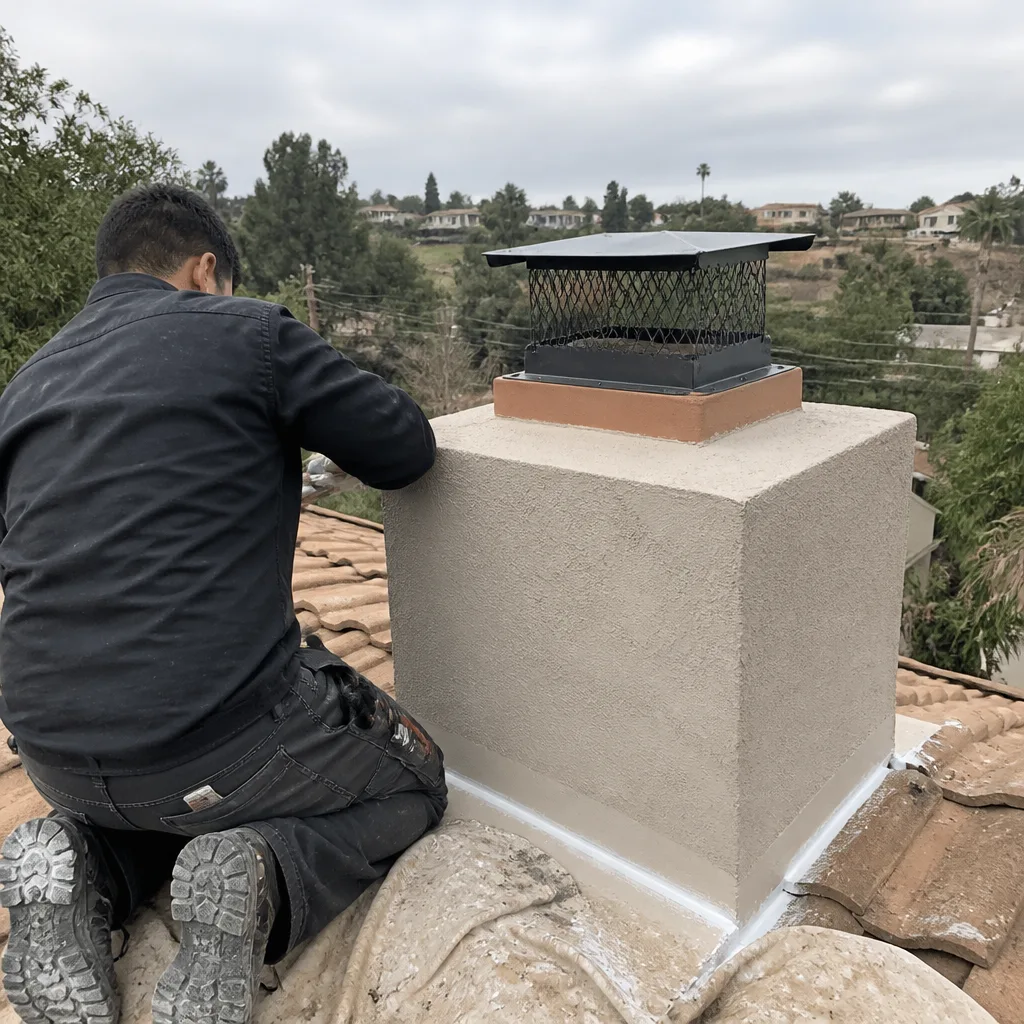
See the difference
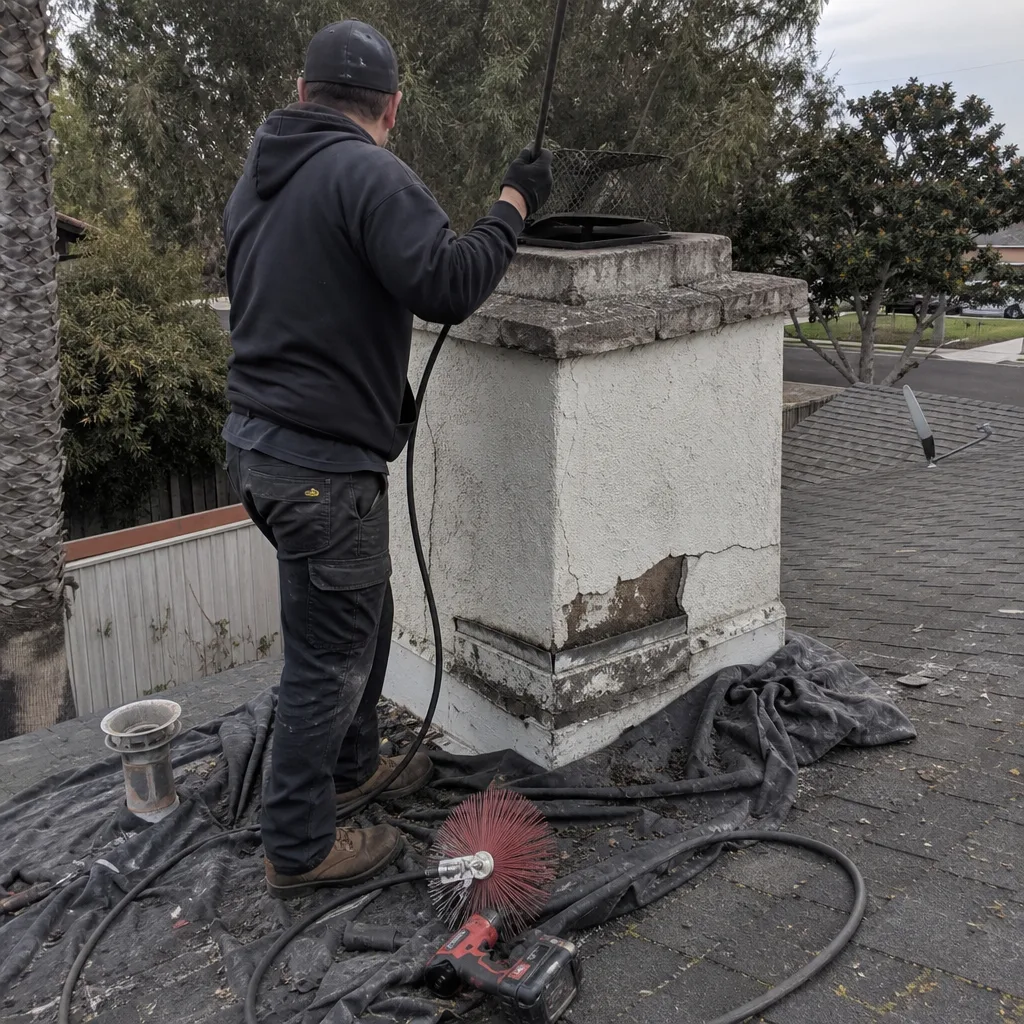 Before
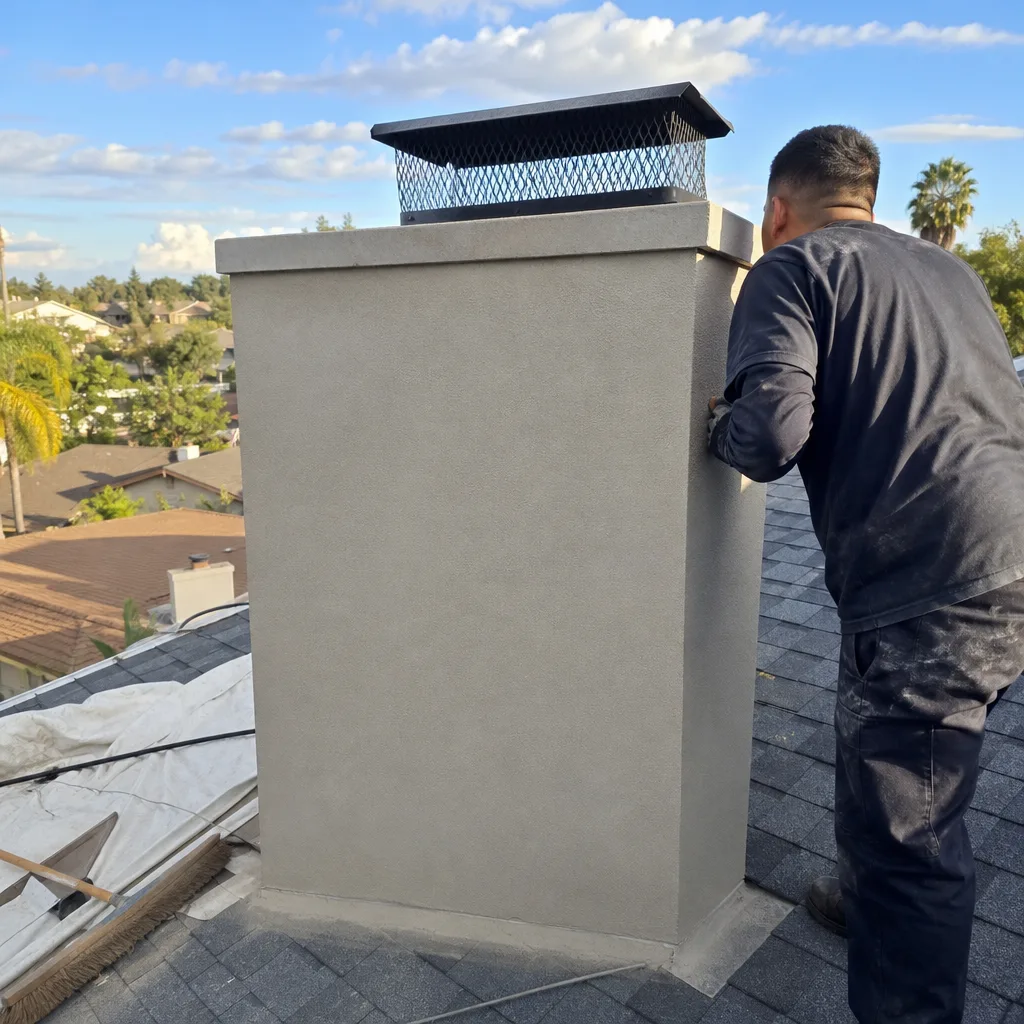 After
After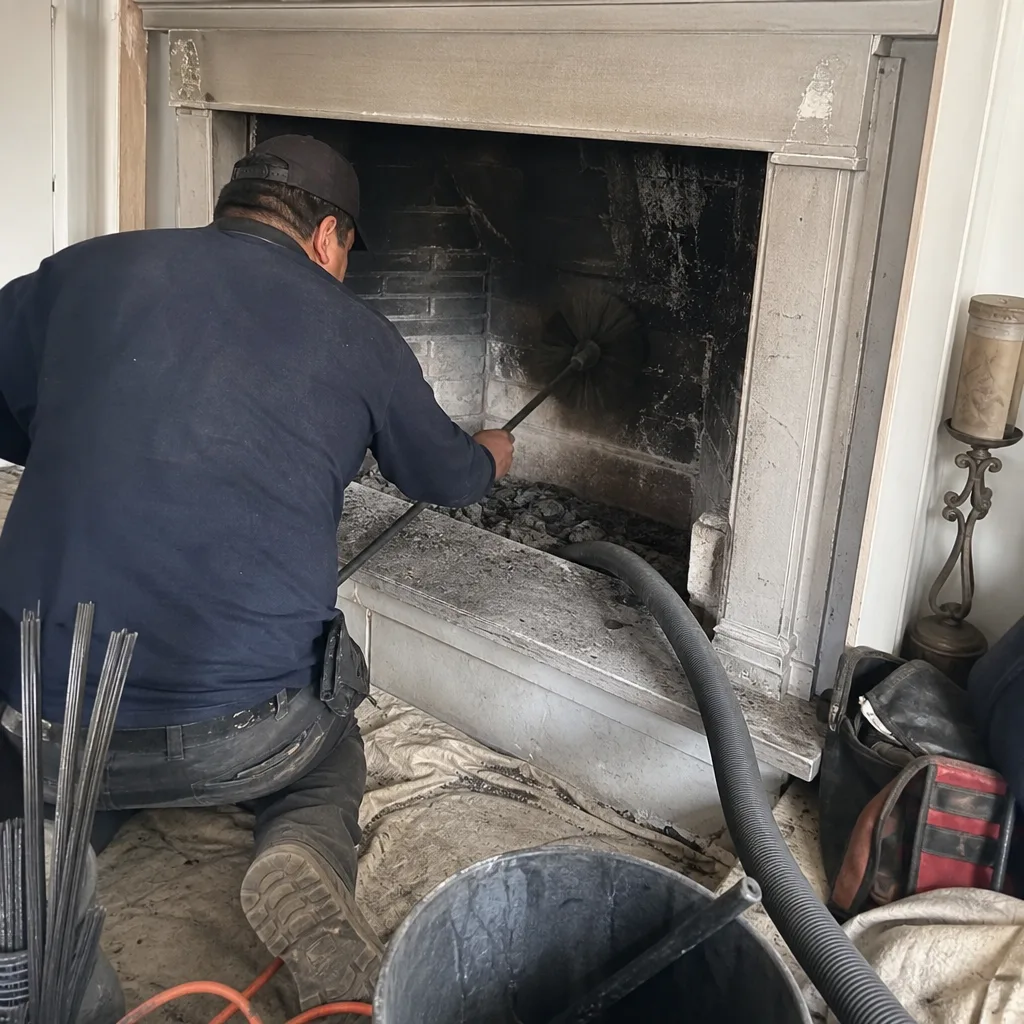 Before
 After
After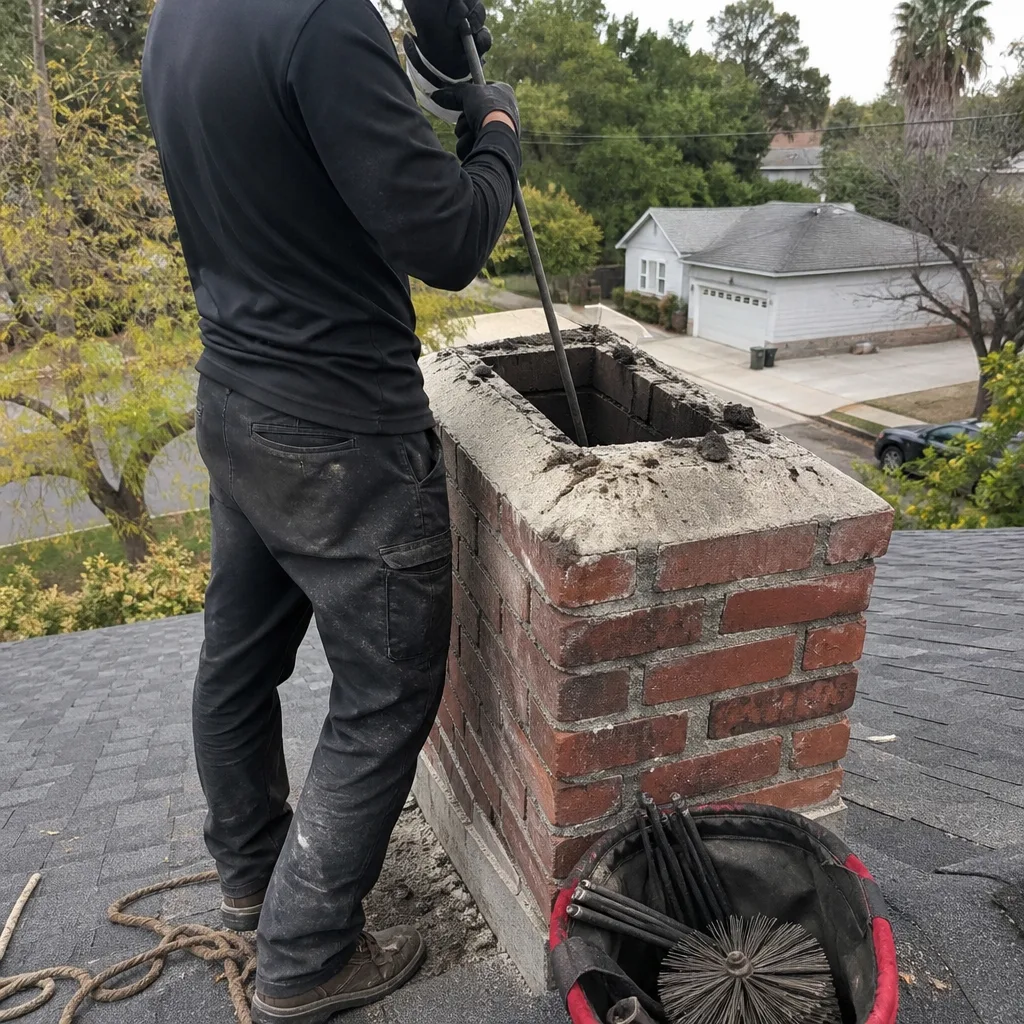 Before
 After
AfterReplacement Cost & What’s Included
In Orange County, expect $180 to $315 for the HeatShield-compatible cap itself, depending on flue diameter and whether you choose stainless or the copper upgrade, plus $95 to $190 in labor for a standard one-story roof access. A two-story home with a steep pitch near the hills of Orange or Villa Park will run at the higher end because we stage ladders and tie off. Every quote includes removal and disposal of the old cap, cleaning the crown surface, seating the new cap with fresh masonry screws or tension fit, and a photo of the finished install before we climb down. We write the price before any work starts, and the install is backed by our 365-Day Done Right Promise: if something isn’t right with the fit or the seal within a year, we come back and make it right.
| Cap Size | Part Range | Typical Installed Total |
|---|---|---|
| 6-inch round | $180 – $225 | $275 – $390 |
| 8-inch round | $200 – $250 | $295 – $415 |
| 13×13 square | $215 – $270 | $310 – $440 |
| 13×18 rectangle | $250 – $315 | $345 – $490 |
DIY or Call Us?
There’s a version of this job an owner can do, and there’s a version that goes wrong. What you can safely check from the ground: whether the cap sits level, whether the mesh is intact, whether you can see rust streaks on the tile. What you shouldn’t do: carry a 35-pound cap up a ladder while holding a drill, especially on a two-story Orange County roof with Spanish tile. The danger isn’t the cap, it’s the height and the slope. We’ve also seen DIY installs where the homeowner drilled into the clay tile crown and cracked it, which turns a $400 cap replacement into a $1,500 crown repair. Danny and his crew have the roofing harnesses, the right masonry screws, and the habit of putting down drop cloths before anything leaves the truck. If you’re unsure whether your cap is actually done, call (831) 217-7981 and describe what you see; we’ll tell you straight if it needs replacing or if it can wait.
FAQs
Ten to fifteen years is typical for the stainless version in Orange County’s climate, though homes within five miles of the coast often see the galvanized mesh start to rust in six to eight years from salt air. The stainless lid itself usually outlives the mesh body. If you’re buying a replacement, ask for the all-stainless option, not the stainless-lid-over-galvanized-body version, because the mesh is what fails first. Call (831) 217-7981 and we’ll tell you which one is on your chimney right now.
Sometimes the mesh can be patched if the lid and skirt are still sound, but on most Orange County homes we see, rust in one section means the surrounding mesh is close behind it. A patch can buy a season, not five years. If the lid is warped or the skirt is rusted through at the screw holes, replacement is cheaper than repeated roof trips.
Most HeatShield cap installations take 45 minutes to an hour from ladder up to ladder down. If the crown needs minor cleaning or the old screws need to be extracted, it may run closer to 90 minutes. We schedule the visit so you know before we arrive what the written price covers, and the cleanup photo is taken before the crew leaves.
We carry common sizes on the truck: 6-inch round, 8-inch round, and 13×13 square. For 13×18 rectangles or custom flue shapes, we confirm the measurement on our first visit and typically have the cap in hand within a week. We’ll show you the cap before it goes on, so you see exactly what you’re paying for.
If your HeatShield chimney cap is corroded, loose, or missing mesh, call (831) 217-7981 for a free estimate. We’ll give you a written price before any work begins, and we’ll leave your roof and firebox cleaner than we found them.
Written by Danny Cortes, Owner, Kindling Chimney Orange County at Kindling Chimney Orange County, serving Orange County and nearby areas.