
Last updated October 15, 2026
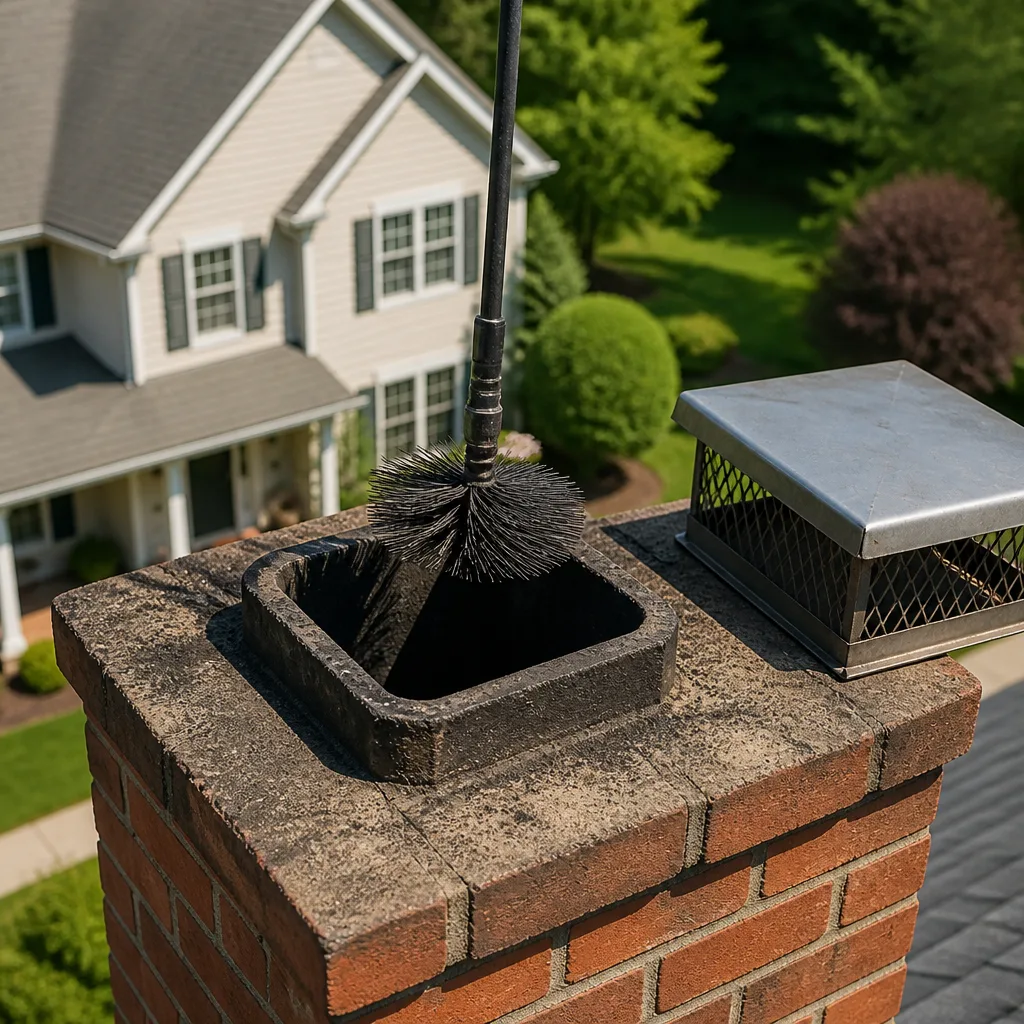 Sweep & inspection
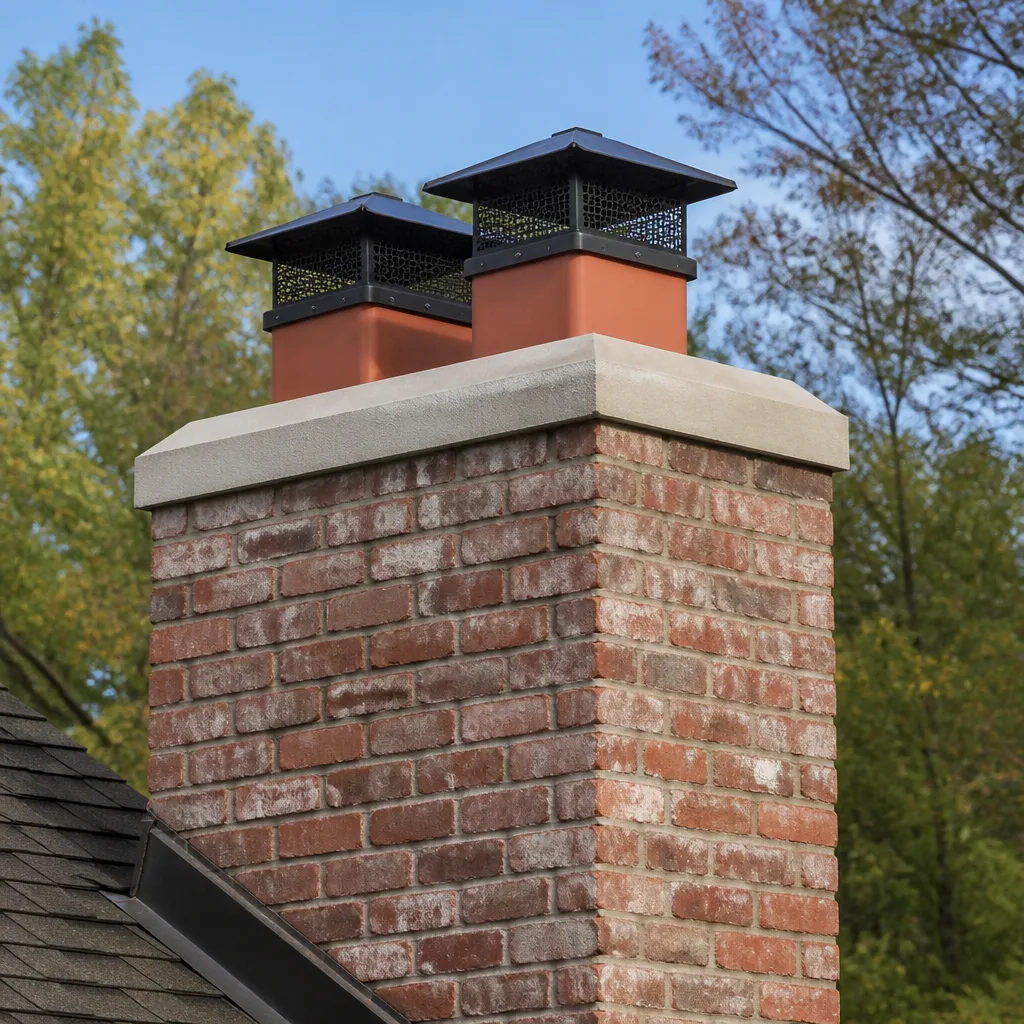 Caps & crowns
 Flue relining
 Masonry repair
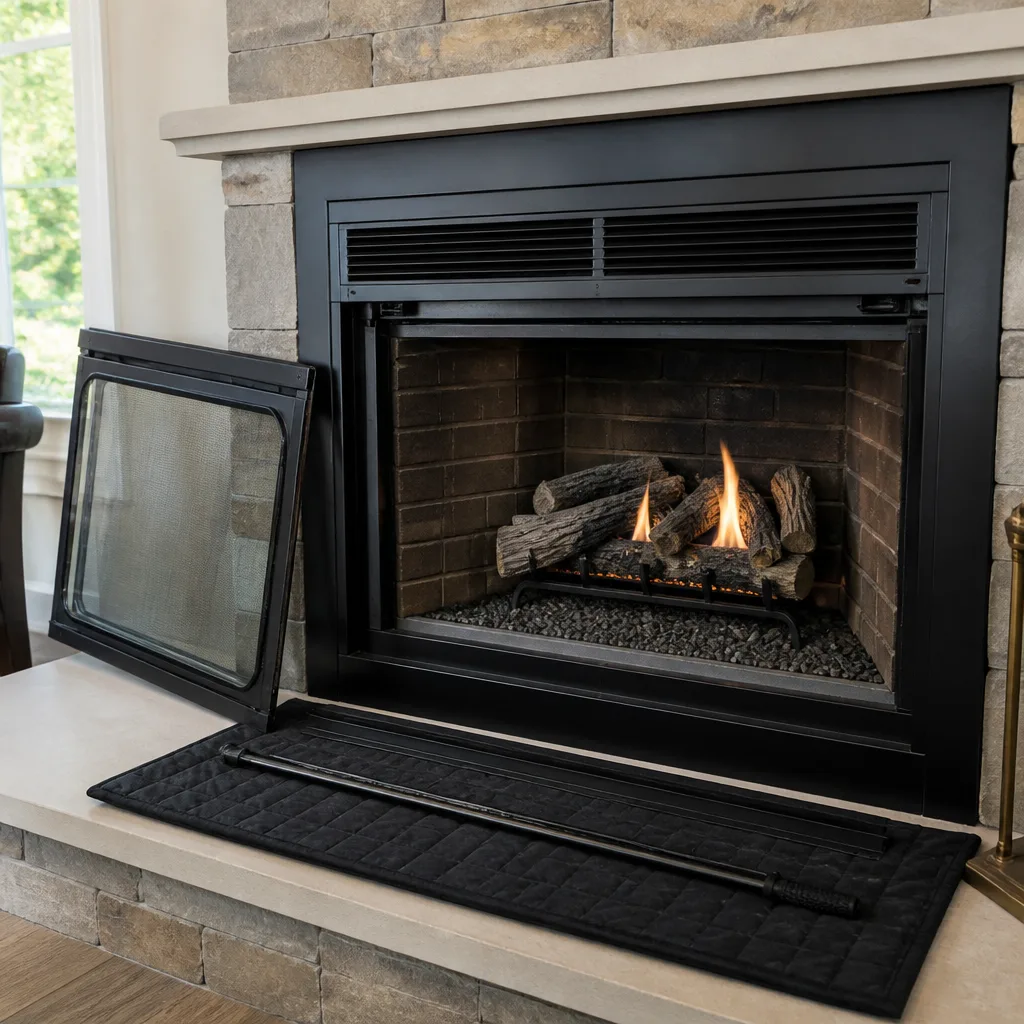 Gas fireplace service
Level 1 sweep and inspection to the NFPA 211 annual standard - flue, crown, cap, and flashing checked and photographed
Chimney sweep logs do not sweep chimneys. They loosen some creosote - which then falls where a brush and vacuum still have to collect it.
DIY vs Professional Chimney Cleaning: The Orange County Homeowner’s Decision Guide
A chimney brush kit costs about $60 on Amazon, and to be fair, it will scrape light soot off your flue walls just fine. But it won’t tell you whether the clay tile behind that soot has a hairline crack that’s been silently venting carbon monoxide toward your kids’ bedroom wall. This guide walks you through what you can safely handle yourself, what genuinely needs a trained technician, and why Orange County’s particular mix of older masonry chimneys, wildfire season, and coastal air changes the math on that $60 kit. For more on finding the right professional, see our step-by-step guide. By the end, you’ll know exactly where the honest line sits between a Saturday DIY project and a documented professional service.
Styles & brands we work with
Quick Answer
DIY chimney cleaning works for light surface soot and visible debris removal, but it cannot assess creosote stage, liner integrity, crown condition, or hidden airflow problems – the four things that actually determine whether your Orange County chimney is safe. For most homeowners, the right approach is a hybrid: handle simple visible maintenance yourself when it’s genuinely simple, and book a professional sweep with a documented inspection once a year. The professional visit costs more up front, but it creates the paper trail your insurance company and home warranty actually want to see.
Table of Contents
- What a DIY Brush Kit Can Honestly Accomplish
- What You Cannot See, Smell, or Access Without Training
- The Orange County Risks That Raise the Stakes
- The Documentation Gap: Why Paper Trails Matter
- The Real Cost Comparison: DIY Kit vs. Professional Visit
- Where Informed DIY Is Genuinely Reasonable
- Common Mistakes to Avoid
- When to Call a Professional
- Frequently Asked Questions
- The Bottom Line
What a DIY Brush Kit Can Honestly Accomplish
Let’s start with what we’re not going to do here: we’re not going to tell you that touching your chimney with a store-bought brush voids your warranty, wrecks your flue, or marks you as an irresponsible homeowner. None of that is true. In our experience serving Chimney Sweep in Orange County homes for two decades, plenty of homeowners do light seasonal maintenance themselves without incident.
Here’s what a standard DIY brush kit, the kind you’ll find at any hardware store in Irvine or Huntington Beach, can accomplish when used correctly:
- Remove surface soot and light creosote dust – Stage 1 creosote is fluffy and powdery. A brush knocks it down. This is genuinely useful between professional cleanings.
- Clear visible debris from the firebox – Leaves, small twigs, and the occasional bird nest material sitting at the base of your fireplace are easy to remove by hand with gloves.
- Clean the glass doors – Fireplace glass needs regular wiping, and the right cleaner (or vinegar and newspaper in a pinch) does the job without a service call.
- Check the visible damper – You can see if your damper opens, closes, and seats properly from inside the firebox. If it’s stuck or rusted, you’ll notice.
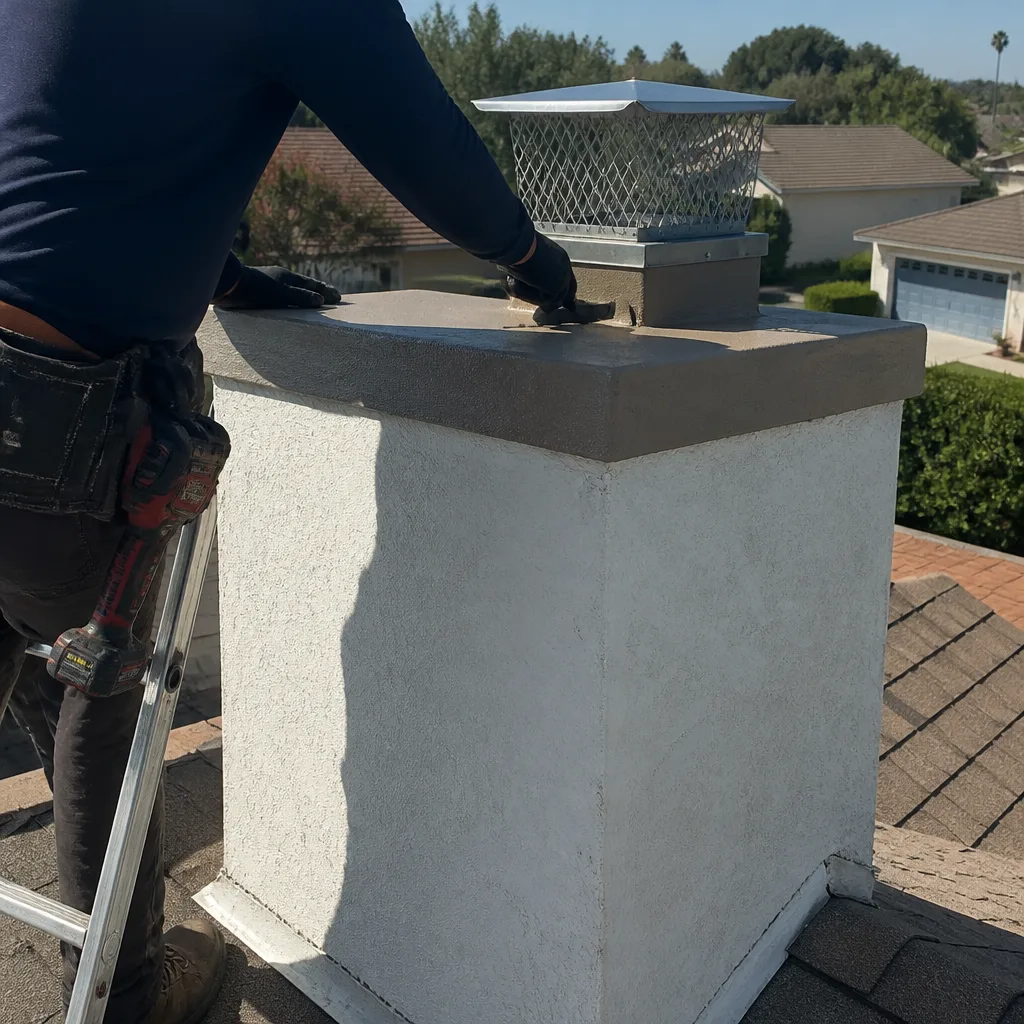
- Inspect the cap from the ground – With binoculars from your yard, you can see if your chimney cap is visibly missing, dented, or covered in leaves.
All of that is real maintenance, and doing it costs you maybe $60 to $90 for a brush kit, drop cloths, gloves, and a dust mask. If your fireplace gets used twice a season for ambience, that might be 90% of what you actually need. The problem is the other 10% – and that’s where the risk lives.
What You Cannot See, Smell, or Access Without Training
Here’s the hard truth, spoken plainly: the things that cause chimney fires and carbon monoxide leaks are almost never visible from the firebox or the roof with a naked eye. A brush removes soot. It doesn’t diagnose. And diagnosis is where the actual safety work happens.
Consider these four conditions, all of which we’ve found in Orange County homes this year alone:
Creosote Stage Assessment
Creosote isn’t one substance. It has three stages: Stage 1 is flaky powder, Stage 2 is tar-like glaze, Stage 3 is hardened, shiny glaze that looks like black glass. A brush kit handles Stage 1. It does almost nothing to Stage 2 and literally nothing to Stage 3 – you’d need chemical treatments and professional rotary tools for those. The problem is that Stage 2 and 3 creosote is the stuff that actually fuels chimney fires. If you brush your flue and see clean-looking walls, but Stage 3 glaze is hiding behind a thin layer of fresh soot, you’ve just given yourself a false negative. That’s worse than no cleaning at all because you now believe you’re safe when you’re not.
Liner Integrity
Orange County has a large stock of homes built between 1950 and 1980, and a huge percentage of those chimneys have original clay tile liners. Clay tile cracks under thermal stress – it always does eventually. When a flue tile cracks, it opens a path for heat, gases, and carbon monoxide to move through your chimney structure and into wall cavities or living spaces. You cannot see a cracked flue tile from the firebox with a flashlight. You need a camera inspection to spot it, and even then, trained technicians know what to look for – vertical cracks, offset joints, spalling, missing mortar.
Crown Condition
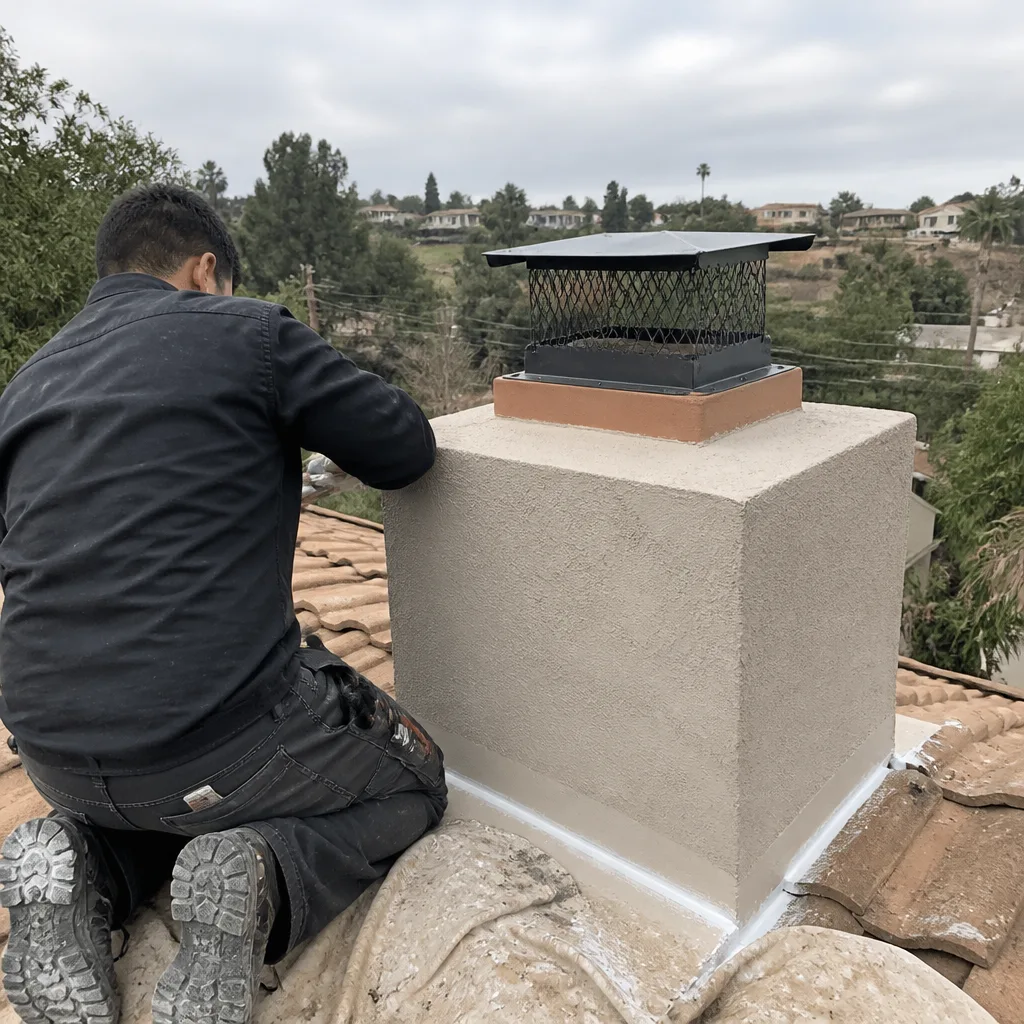
Your chimney crown is the concrete cap at the very top. When it cracks, water gets into the masonry and quietly destroys your chimney from the inside over years. In Orange County, we see crowns crack from a combination of sun exposure, occasional freeze-thaw cycles in canyon areas like Trabuco or Silverado, and the natural settling of coastal soil. From the ground, a cracked crown looks completely fine. From a ladder, with a trained eye, it’s obvious.
Airflow Dynamics
Many Orange County homeowners have converted from wood-burning fireplaces to gas inserts over the past 15 years. A gas insert changes the airflow dynamics of your entire chimney system. The flue that was sized for open wood burning is now oversized for the insert, which changes how condensation forms, how creosote builds, and whether carbon monoxide vents properly. None of this is visible from outside, and none of it is fixed by running a brush through the flue.
You might also notice odors that tell a story: a musty smell after rain suggests water intrusion, a campfire smell in summer often means creosote buildup. But noticing a smell isn’t the same as diagnosing its source, and guessing wrong can send you chasing a problem that doesn’t exist while the real issue compounds.
The Orange County Risks That Raise the Stakes
Every geographic area has its own chimney risks, and Orange County’s are specific enough that they’re worth naming. This isn’t a generic chimney guide – it’s written from the ground up for the houses, climate, and building stock you actually live with here.
Wildfire Ember Intrusion
Orange County sits in a high-wind, chaparral-dry fire corridor. Santa Ana winds push embers miles ahead of a fire line, and those embers don’t need to hit your roof – they get sucked into chimneys, especially uncapped or improperly capped ones. A chimney cap with intact mesh spark arrestor is the single most important wildfire defense your chimney can have. A DIY brush kit does nothing to check cap condition from the top, and a homeowner standing in the yard can’t see whether the mesh has rusted through. This is a seasonal urgency in Orange County: before fire season starts, your cap should be checked.
Older Clay Tile Liners
As mentioned, the 1950s through 1970s building boom left Orange County with tens of thousands of masonry chimneys built with terra cotta clay tile liners. These liners were never designed to last forever. Thermal cycling – heating up during fires, cooling down at night – causes them to crack at predictable rates. Many have already cracked. The homes in Fullerton, Orange, Anaheim, and Santa Ana’s older neighborhoods are especially prone simply because of housing age. If your house was built before 1980 and the chimney hasn’t been camera-inspected in the last five years, you’re flying blind.
Gas Insert Retrofits and Changed Airflow
The gas insert trend swept Orange County hard over the last two decades. It made sense: convenience, efficiency, no wood to stack. But many of those retrofits were installed in chimneys originally designed for open wood burning, and the airflow math changed. A properly maintained gas insert chimney needs different inspection attention than a wood-burning one, and DIY brush kits designed for wood soot are largely irrelevant for gas setups. What you need for a gas insert is a trained eye on the venting, the connector, and the liner condition, not a brush.
Coastal Air and Corrosion
If you live west of the 405 – Huntington Beach, Costa Mesa, Newport Beach, Laguna – you’re dealing with salt air. Salt air corrodes metal components faster: chimney caps, dampers, flashing, even the metal parts of a gas insert’s venting system. A cap that looks fine from the ground might be rusting through in ways that let rain water into your flue. Coastal Orange County homes should have those metal components checked more often than inland homes, and again, none of this is visible to a homeowner with a pair of binoculars.
The Documentation Gap: Why Paper Trails Matter
Here’s a subject almost no DIY chimney guide covers, and it’s the one that costs people real money. When a professional chimney sweep services your chimney, you get a written report. That report documents the condition of your flue, liner, crown, cap, damper, and firebox at a specific moment in time. For a homeowner who plans to sell, file an insurance claim, or lean on a home warranty, that piece of paper is worth more than the sweep itself.
Think about how insurance claims work after a chimney fire. Your adjuster is going to ask when the chimney was last professionally inspected and cleaned. If your answer is “I brush it myself every year,” you’ve just handed the insurance company a reason to deny or reduce your claim. If your answer is “here’s a written inspection report from six months ago,” your claim moves forward. Insurance companies don’t respect good intentions; they respect documentation.
The same logic applies to home sales. Orange County real estate moves fast, and home inspectors often flag chimneys for further evaluation. A seller with a recent professional inspection report has a clean answer. A seller who has been DIY-cleaning for years has no paper trail, and the buyer is now wondering what else hasn’t been professionally maintained.
Warranty coverage works the same way. Many chimney liner products – we install Fireplace Repair in Orange County solutions using brands like DuraFlex and HeatShield – carry manufacturer warranties that are only valid if the chimney receives annual professional maintenance. Skip the professional visit, and you’ve quietly voided a warranty you might need later if that liner fails.
The Real Cost Comparison: DIY Kit vs. Professional Visit
Let’s talk dollars, because this is where the decision gets made in most Orange County kitchens. See our full 2026 cost breakdown for detailed pricing. Here’s what a DIY chimney cleaning actually costs, all in:
- Brush kit with rods: $50-$110 depending on quality and flue size
- Ladder rental or purchase (if you don’t own one tall enough): $40-$80 for a day, or you’re buying one
- Drop cloths, gloves, dust mask, goggles: $25-$40
- Creosote removal chemical treatment (if needed): $20-$35
- Your time: 3-6 hours for a first-timer, including setup and cleanup
Total DIY cost: roughly $135 to $265, plus most of a Saturday. And at the end of it, you’ve removed surface soot. You haven’t assessed creosote stage, inspected the liner, checked the crown, or documented anything.
A professional chimney sweep in Orange County typically runs between $175 and $300 for a standard cleaning and inspection, depending on chimney size, accessibility, and whether you have a wood or gas fireplace. That price includes: the actual sweeping, a full visual inspection with documentation, a written report you keep, and the knowledge of a trained technician who has seen hundreds of Orange County chimneys and knows what “normal” looks like here.
When you subtract the DIY supplies you don’t buy, the Saturday you get back, and the value of the written report, the professional visit costs about the same as a nice dinner out. That’s not a sales pitch – it’s the actual math. And for what it’s worth, Kindling Chimney Orange County home services always include a written price before any work starts, so you know the number before we ever set up a ladder.
Where Informed DIY Is Genuinely Reasonable
We’ve been honest about the limits of DIY. Now let’s be equally honest about where DIY is completely reasonable. There are a handful of chimney and fireplace maintenance tasks that any careful homeowner can handle, and we’d rather tell you how to do them safely than pretend they all require a service call.
Here’s the short list of genuinely reasonable DIY tasks, with the honest instructions:
1. Cap Debris Removal (From the Ground, Safely)
- Grab a pair of binoculars and stand in your yard where you can see the chimney cap clearly.
- Look for visible issues: missing cap, dented metal, rust patches, leaves piled on top, bird nest material poking out.
- If you see debris ON the cap but the cap itself looks intact, you can try a gentle removal from the ground using a long extension pole with a soft brush head – but never climb onto a roof unless you’re confident on ladders, your roof is walkable, and you have someone spotting you.
- If the cap is damaged, missing, or rusted through, that’s a professional call. A damaged cap in Orange County is a direct wildfire risk.
2. Visible Damper Check
- Open your damper fully and look at the metal plate with a flashlight.
- Check that it opens smoothly, closes fully, and seats without gaps.
- Look for rust, warping, or broken handle hardware.
- If the damper is stuck open, you’ll feel cold air drafting down in winter. If it’s stuck closed, you must not use the fireplace at all until it’s fixed.
- Rusted or warped dampers are a professional repair – but identifying the problem yourself is useful.
3. Glass Door Cleaning
- Let the fireplace cool completely – this is non-negotiable. Cold glass only.
- Use a fireplace glass cleaner (never standard window cleaner on fireplace glass – the ammonia can react with the coating).
- Spray the cleaner on a cloth, not directly on the glass, to keep overspray off your hearth.
- Wipe clean with a dry microfiber cloth.
- Do this once a month during burning season. It’s quick, it’s safe, and it keeps your view of the fire clear.
4. Firebox Ash Removal (When Fully Cold)
- Wait at least 72 hours after your last fire. Coals can smolder for days, and Orange County’s dry air doesn’t speed this up enough to risk it.
- Wear a dust mask and gloves.
- Shovel ash into a metal bucket with a tight-fitting lid. Never use paper bags, plastic bins, or anything that could ignite.
- Dampen the ash slightly with water before sealing the lid.
- Store the sealed metal bucket outside, away from the house and away from anything flammable, until trash day.
These four tasks cover most of what a homeowner can and should do themselves. Everything beyond this – anything involving the flue interior, the liner, the crown, the flashing, or the upper chimney structure – is where the trained eye becomes necessary.
For the record, when our technicians work in Orange County homes, they follow the Cedarwell Care Promise: shoe covers and drop cloths go down before anything else, nothing is moved without asking, a written price is delivered before any work starts, and a photo of the clean-up is taken before the crew leaves. That’s the standard we hold ourselves to, and it’s what any professional you hire should offer.
Common Mistakes to Avoid
- Brushing a flue and assuming it’s clean when it’s not. Surface soot removal without creosote assessment gives you a false sense of safety. Stage 2 or 3 creosote can remain even after a brush passes through, and that’s the material that actually fuels chimney fires.
- Skipping the cap inspection during fire season. In Orange County, an uncapped or improperly capped chimney during Santa Ana wind events is an open invitation for embers. This is the single most preventable wildfire risk your chimney presents.
- Using the wrong brush type. There are different brush shapes and materials for round flues, square flues, clay liners, and metal liners. Using the wrong one can scratch a metal liner or fail to clean a clay tile one properly. Most hardware store kits are one-size-fits-most, which means one-size-fits-mostly-wrong.
- Cleaning a gas insert chimney with wood-burning tools. Gas insert systems have completely different venting needs than wood-burning chimneys. Running a standard brush through a gas vent can damage the liner and does nothing for the actual maintenance points that matter.
- Climbing onto a roof without proper ladder safety. Flat Orange County roofs and steep tile roofs both present real fall risks. Chimney work from a roof edge is one of the most common sources of serious homeowner injury. If you’re not 100% comfortable on a ladder against your specific roof, don’t climb it.
- Not keeping records of your DIY maintenance. Even if you do light maintenance yourself, write it down. Note the date, what you did, and what you observed. If you ever need to demonstrate ongoing maintenance to an insurer or buyer, a simple log is far better than nothing.
- Treating a smell as a diagnosis. A musty odor after rain could mean water intrusion through a cracked crown – or it could mean a damp flue that needs airing. A campfire smell in July could mean creosote buildup – or a backdraft issue. Smelling a problem is a signal to investigate, not a conclusion to act on.
When to Call a Professional
Here’s the short version, stated clearly. Call a professional when: you haven’t had your chimney inspected in over a year and you use it regularly; you smell smoke or gas inside your home when the fireplace is running; you see visible cracks in the firebox bricks or mortar; your chimney cap is missing or visibly damaged; you’ve had any water intrusion around the chimney after rain; you just bought an older home in Orange County with an original chimney and no maintenance records; or you’re preparing to sell and need documentation. Chimney Inspection in Orange County from Kindling always includes a written report you keep. If you’re not sure whether you need a sweep or an inspection, call (831) 217-7981 and tell us what you’re seeing. We’ll give you a straight answer, not a sales pitch. Free estimates in Orange County – always.
Frequently Asked Questions
A standard chimney sweep in Orange County typically runs between $175 and $300, depending on chimney size, roof accessibility, and whether you have a wood-burning or gas fireplace. At Kindling Chimney Orange County home, a written price is delivered before any work starts – always included, never optional – so you’ll know the exact number before a technician ever sets up a ladder. Call (831) 217-7981 for a free estimate.
Light surface soot removal with a brush kit is safe for many homeowners when done carefully, but it does not assess the safety-critical systems of your chimney – creosote stage, liner integrity, crown condition, or airflow. The risks in Orange County (wildfire ember intrusion, older clay tile liners, changed airflow from gas insert retrofits) are not visible with a DIY cleaning, and a false sense of safety is more dangerous than a dirty flue.
The National Fire Protection Association standard, which most Orange County insurance companies follow, is that chimneys should be inspected at least once a year and cleaned as needed based on usage. If you burn wood more than twice a month during the season, an annual sweep is appropriate. If you use your fireplace only occasionally, you might go 18-24 months between cleanings – but the annual inspection is still the standard to maintain documentation.
Yes, but the inspection focuses on different things than a wood-burning inspection. Gas insert systems need checking on the venting, the connector integrity, the liner condition, and the carbon monoxide safety. Many Orange County gas insert retrofits were installed in chimneys originally sized for wood burning, and that airflow mismatch creates specific concerns that a gas insert inspection is designed to catch. A DIY brush kit is irrelevant for gas systems – what you need is a trained eye.
Skipping maintenance doesn’t automatically make your chimney dangerous – it makes your chimney unknown. You’re operating without current information about its condition, which is a risk in an older Orange County home with a clay tile liner that may have cracked silently. Creosote can build to dangerous stages, water can intrude through unnoticed crown cracks, and a damaged cap can leave your chimney vulnerable during fire season. Most problems that become expensive or dangerous started as small issues that were visible years earlier to a trained inspector.
You can see the firebox, the visible damper plate, and perhaps the first foot or two of the flue with a flashlight and a phone. You cannot see the upper flue, the liner joints, the crown, the cap interior, or any of the areas where problems are most likely to hide. Professional chimney sweeps in Orange County use dedicated camera inspection equipment designed to be lowered through the full flue length, capturing clear footage of every tile joint and liner section. That’s the documentation that matters for insurance and warranty purposes. Call (831) 217-7981 for a free estimate on a professional inspection.
The Bottom Line
The DIY versus professional chimney cleaning decision in Orange County comes down to one honest distinction: DIY handles what you can see, and professional service handles what you can’t. A brush kit removes surface soot just fine, but it cannot tell you whether your 1968 clay tile liner has a crack that’s been venting carbon monoxide toward a bedroom wall. For homeowners in Orange County, where wildfire season sends embers over canyon ridges and thousands of mid-century chimneys are aging past their original design life, the professional inspection isn’t an upsell – it’s the actual product. You can do the simple stuff yourself. Just don’t mistake a clean firebox for a safe chimney. If you want a straight answer about what your chimney actually needs, call (831) 217-7981. For more guides & resources, visit our blog. We’ll give you a written price before any work starts, and you’ll keep the report either way.
Written by Danny Cortes, Owner at Kindling Chimney Orange County, serving Orange County since 2003.
See the difference
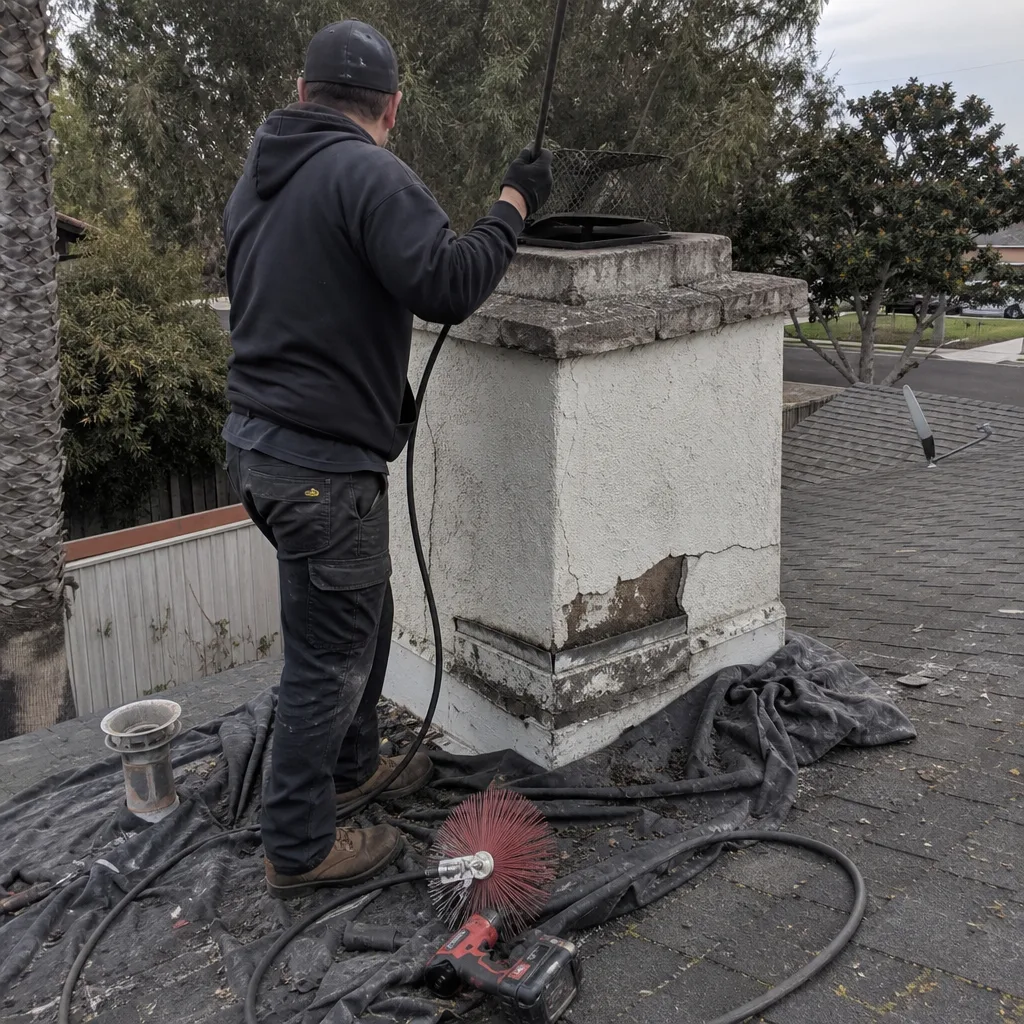 Before
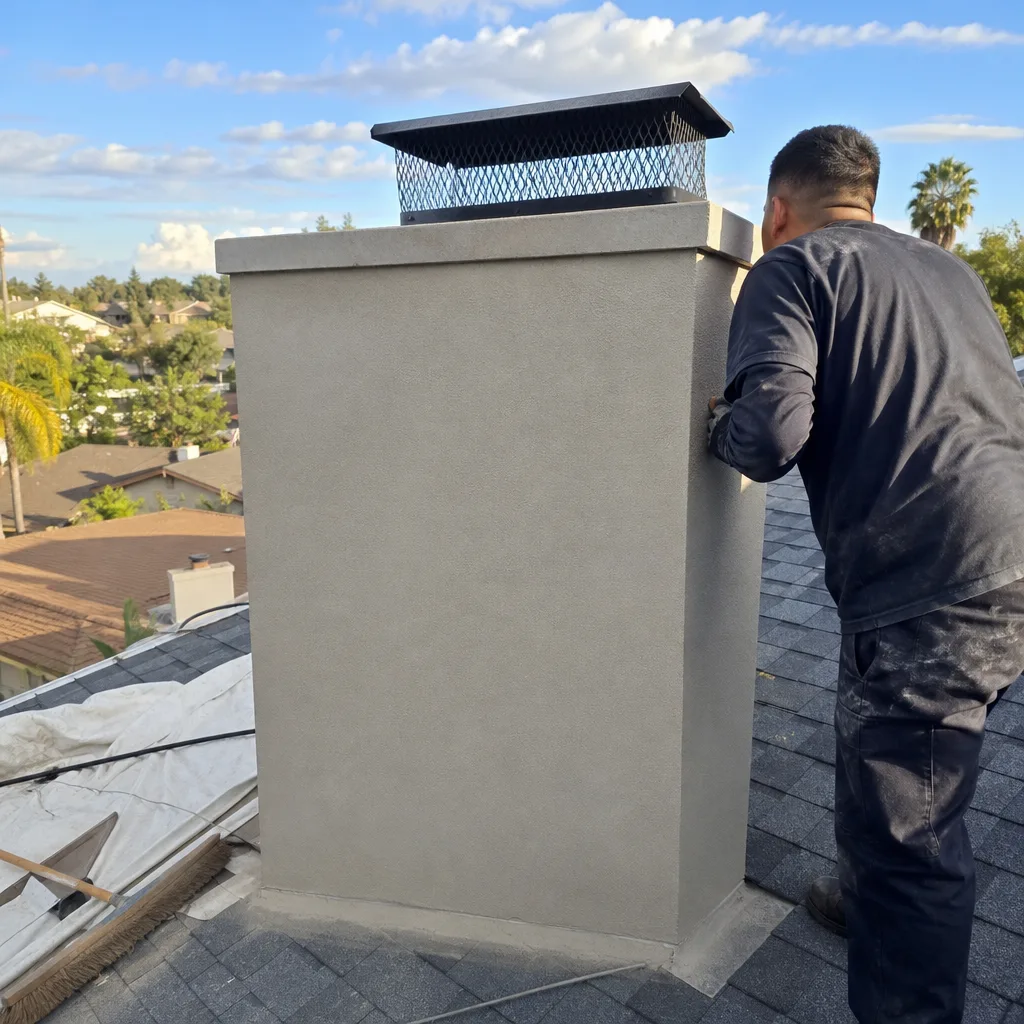 After
After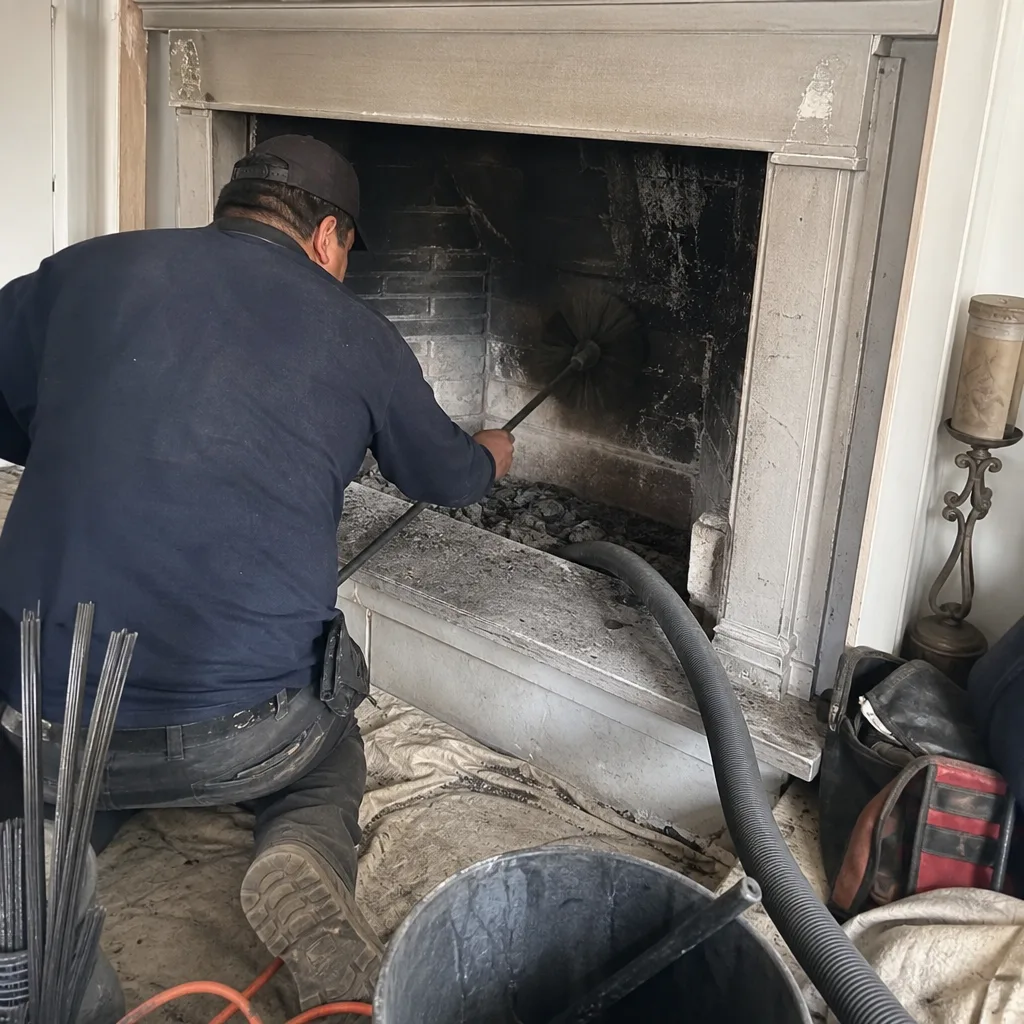 Before
 After
After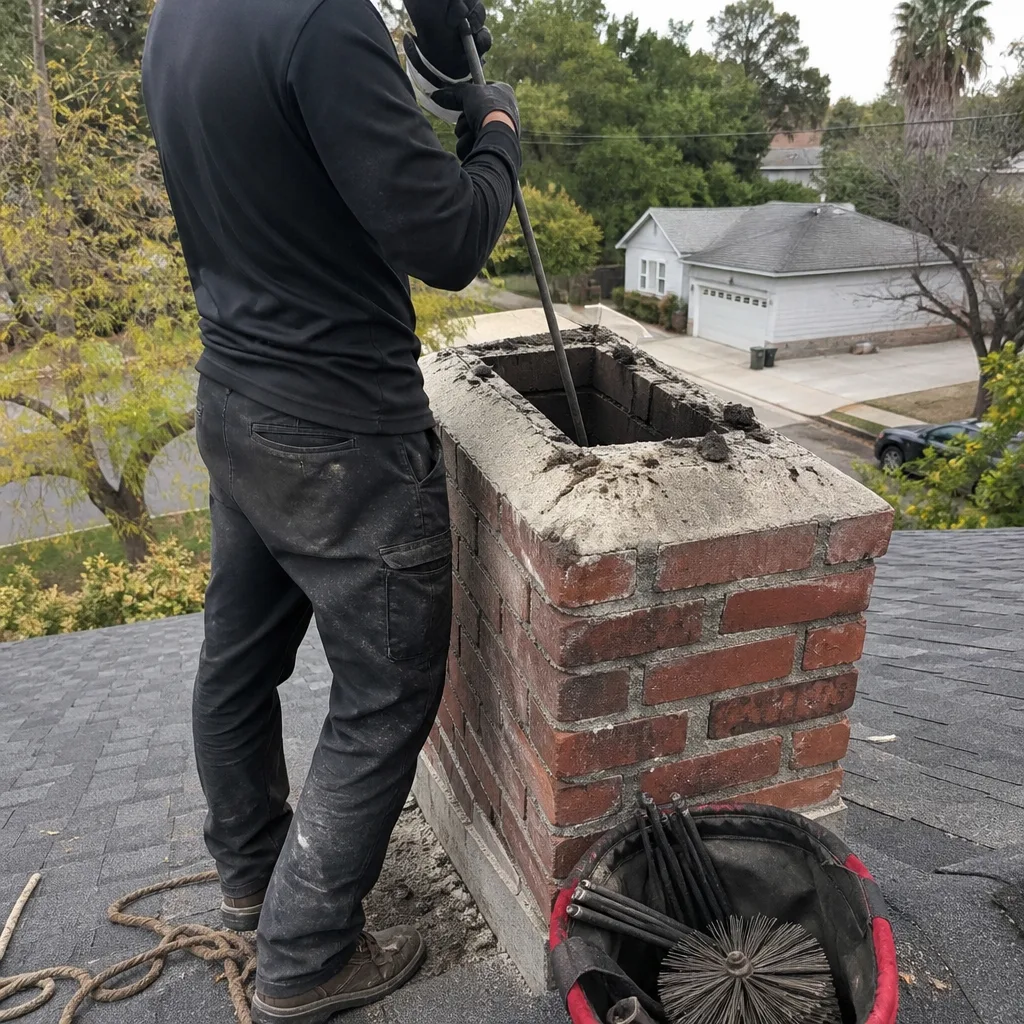 Before
 After
After